KUOW’s book club is reading “Subduction” by Kristen Millares Young this month.

KUOW’s book club will read “Subduction” by Kristen Millares Young this month.

Young’s debut novel tells the story of a Latina anthropologist who seeks refuge in Neah Bay. But her quest for solace on the Makah Nation puts her on a collision course with a family looking for answers about a father’s death.

Subduction” made a big splash in the literary world when it came out in 2020, and I imagine more than a few of you will be familiar with this title. So, as we read, we’ll dive deeper into the text and, spoiler alert, we’ll wrap up with an in-depth interview with the author herself (exciting details to come)!

Epiphany Journal interviews Helen Benedict on her novel THE GOOD DEED

Helen Benedict, a British-American professor at Columbia University, is the author of seven previous novels, six books of nonfiction, and a play. Her newest novel, The Good Deed (Red Hen Press), is set in a refugee camp in Greece, and comes out of the research Helen conducted for her 2022 nonfiction book, Map of Hope and Sorrow, co-authored with Syrian writer and refugee Eyad Awwadawnan. The novel follows the stories of five women: four women living in an over-crowded, fetid refugee camp on the beautiful Greek island of Samos and an American tourist who comes to Samos to escape her own dark secret.

Constant Wonder Podcast speaks to David Mas Masumoto, author of SECRET HARVESTS

Hobart Breakfast show features PACIFIC LIGHT’s David Mason

Poet Q&A: Kim Stafford finds poetic fodder in nature, war, boyhood, and writing in new book, ‘As the Sky Begins to Change’

This spring, Kim Stafford released As the Sky Begins to Change, his third book of poetry from California-based Red Hen Press. The empathetic and witty collection by the educator, writer, and Oregon’s ninth poet laureate deals with themes of nature, humor, war, politics, memory, and heartache. It has been set to music, quoted in The New York Times, posted in the Academy of American Poets Poem-a-Day series, gathered in a chapbook sold to benefit Ukrainian refugees, and posted online in response to a Supreme Court decision — marking itself as a text of the times.

Lynnell Edwards writes about her poetry and THE BEARABLE SLANT OF LIGHT in Mad in America

Me: I think there’s a lot of trauma he has to process

Dr. K: Did something happen?!

—“Medical History #2,” The Bearable Slant of Light

In the first intake documents from my son’s first hospitalization, the attending psychiatrist wrote: “On examination, the patient presents as a very poor historian.” In other words, he couldn’t tell a coherent and accurate story of  what had happened that had led him to bolt from the therapist’s office that July afternoon and subsequently be transported to the hospital for psychiatric evaluation.  

Even now, ten years later, it is not clear that he is yet able to tell that story that reflects his truth about what his life is and will be. 

Shelf Unbound’s Summer 2024 Issue Features Multiple of our Authors!

Thank you to the Shelf Unbound Editor for the immense support for our titles!

Mirage by Nahid Rachlin

Sonnets for a Missing Key by Percival Everett

Circle of Animals by Sadie Hoagland

Memento Mori by Eunice Hong

The Curve of Equal Time by Thomas McGuire

Another North by Jennifer Brice

A Punishing Breed by DC Frost

Carrion by Wes Jamison

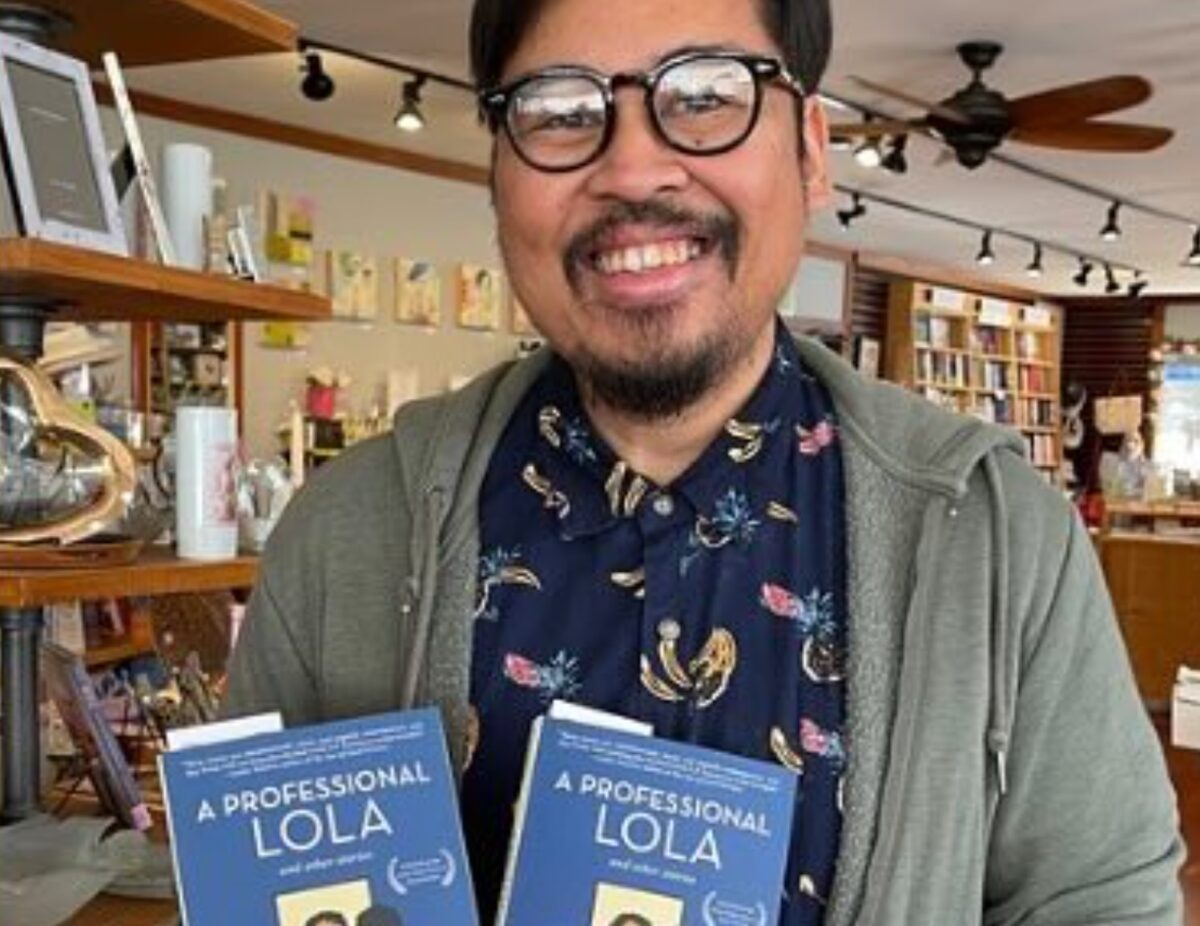
A Professional Lola by E.P. Tuazon (pg 181)

Dear Edna Sloane by Amy Shearn

The Good Deed by Helen Benedict

Deer Black Out by Ulrich Jesse K Baer

The Bearable Slant of Light by Lynnell Edwards

As the Sky Begins to Change by Kim Stafford

Blue Atlas by Susan Rich

Excerpts from

Annika Rose by Cheri Johnson

Another North by Jennifer Brice

Carrion by Wes Jamison

ANNIKA ROSE’S Cheri Johnson featured on MN Reads on Northland Morning

Rosemary’s Baby but set in Northern Minnesota” is how author Cheri Johnson describes her latest work. Annika Rose follows the title character as she navigates the early stages of adulthood while understanding a snarl of relationships between friends, her father, and other residents of the remote Lake of the Woods County.

An only-child to a single-parent, Annika’s transition through her formative years was a lonely one. “I was always thinking about what that would have done to her; that social isolation,” says Johnson of her protagonist. As the story follows Annika, we see uncertainty when she meets new neighbors and avoidance tactics when faced with running into peers.

Author Event with AS THE SKY BEGINS TO CHANGE author Kim Stafford at Elliot Bay Book Company in Seattle, WA, Tuesday June 11th at 7:00 PT

Poet Kim Stafford once again visits the store from Portland for the Seattle launch of his latest collection. As the Sky Begins to Change is a book of poems to wake the world, lyric anthems for earth and kin.
 

In his third poetry collection from Red Hen Press, Kim Stafford gathers poems that sing with empathy, humor, witness, and story. Poems in this book have been set to music, quoted in the New York Times, posted online in the Academy of American Poets Poem-a-Day series, gathered in a chapbook sold to benefit Ukrainian refugees, posted online in response to Supreme Court decisions, composed for a painter’s gallery opening, and in other ways engaged with a world at war with itself, testifying for the human project hungry for kinship, exiled from bounty, and otherwise thirsting for the oxygen of healing song.

Author Event with AS THE SKY BEGINS TO CHANGE author Kim Stafford including workshop and reading at Village Books in Bellingham, WA, Monday June 10th at 6:00 PT

In his third poetry collection from Red Hen Press, Kim Stafford gathers poems that sing with empathy, humor, witness, and story. Poems in this book have been set to music, quoted in the New York Times, posted online in the Academy of American Poets Poem-a-Day series, gathered in a chapbook sold to benefit Ukrainian refugees, posted online in response to Supreme Court decisions, composed for a painter’s gallery opening, and in other ways engaged with a world at war with itself, testifying for the human project hungry for kinship, exiled from bounty, and otherwise thirsting for the oxygen of healing song.

Content Bookstore hosts a LIVE Conversation with CHERI JOHNSON

An interview with Elise Paschen for Water~Stone Review!

Your poem, “Divination,” is a gorgeous blend of imagery, myth, and spring welcoming. Where did the spark for this poem come from?

Thank you! During the pandemic, our family moved to a house in rural southwest Michigan. Spending days in isolation, I became fascinated by the birds outdoors. In another poem in this series, “Skywriting,” I describe living in our house as if in an aviary. When I drafted “Divination,” I had been inspired by the image of robins festooning a tree in the cold of winter. I then continued the trajectory of my beguilement by imagining the emptied nests around our house inhabited in spring.

I love the cascading effect of the lines. With layered poetry like this, I’m always curious if there’s another way this poem can, or is intended, to be read? How did you craft this format?

While working on “Divination,” I also was writing a long poem, “Heritage,” which employed a similar staggered stanza structure. In the past I’ve written contrapuntal poems which can be read vertically or horizontally. This one functions more as a concrete poem, mimicking spatially the robins on the branches. Behind the poem’s structure lies this notion of threes, inspired by a sense of divinity in nature.

So much of your work delves into the themes of relationships and nature. What draws you to these themes?

Throughout my life I’ve had an ineffable relationship with the natural world, a place which offers inspiration and sustenance. During our time of isolation, I rooted more deeply into realms outside the human one.

Your poems have the qualities of stories. What is your writing process? When you set out to write a poem, do you have a narrative, or do you work from imagery? 

I try to catch the impulse of the poem when it arrives, allowing the music to carry its own momentum. I often will write the first draft quickly and then continue redrafting the original version. Poems have been inspired by many things—history, dreams, art, film, myth, memory, emotion, the natural world, to name a few. I wrote my doctoral dissertation on William Butler Yeats’s revisions of his female persona poems, and I am a relentless reviser. When working on a poem, I hope that the language will help to determine its particular direction. I also endeavor to surprise myself while writing—so, much of the time, I don’t know where the poem will travel. 

Over these past years I’ve envisioned writing a book-length project. My previous books have been assembled through accretion, poem by poem. With my new book, “Blood Wolf Moon,” I’ve attempted to create a narrative which engages the reader from beginning to end. Within the dramatic propulsion of the narrative there is an intrinsic architecture, a sense of plot or even a five-act structure.  

A new writing preoccupation is to create sequences of poems, in which one poem will lead to the composition of the next. As I had mentioned, “Blood Wolf Moon” opens with a long poem called “Heritage,” composed of hanging indent stanzas. The last line of the first poem becomes the first line of the next, creating a crown of fourteen poems. There are several other series in the book, including the avian poems and a botanic suite, which I’ve broken up and scattered throughout. In part four of the book, I’ve taken earlier prose fragments and created a prose poem memoir sequence.

Poetry is, in a way, a language unto itself. And you’ve written work that incorporates the Osage Nation’s language, including “́/Waléze/Stationery” and “͘ ́ ́/Máze Htáhtaze/Typewriter.” Can you talk about what your process is like when working with multiple languages in your writing?

I have always been fascinated by the Osage language. On my desk are two Osage dictionaries, the older one compiled by Francis La Flesche and the newer one by Carolyn Quintero. The La Flesche dictionary helped my work on a poem called “Wi-gi-e,” which is spoken by Mollie Burkhart whose family was systematically murdered during the Reign of Terror (1921-1926) in Oklahoma. A line from that poem, “During Xtha-cka Zhi-ga Tse-the, the Killer of the Flowers Moon,” helped to inspire the title for David Grann’s book and Martin Scorsese’s film, “Killers of the Flower Moon.” 

While working on “Blood Wolf Moon,” I began delving into Quintero’s dictionary. In “́/Waléze/Stationery” and “͘ ́   ́/Máze Htáhtaze/Typewriter,” I chose words in the dictionary at the end of the alphabet and worked my way forward. With regard to this process, I see the words in translation and the poem arises, tapping my past, my dream life, my unconscious, offering unexpected discoveries. Esther Belin accepted these poems for her special issue on Land Acknowledgment for “Poetry” Magazine. Right after the acceptance, I became aware of the creation of Osage orthography by the Osage Nation. Christopher Cote from the Osage Nation Language Department provided the translations in orthography for the poems. 

Where do you draw inspiration from in your life? What authors or works inspire you?
Vox Populi feautres “Return of the Warbling Vireo” by Pamela Uschuk, author of REFUGEE!

Deep in the oleanders’ dense thicket, a warbling vireo screams
for a mate, another migrant back from his long
trek from Mexico. He loves the green tango
of poison leaves keeping his slim gray body
safe from Cooper’s hawk, the snelled claws
of our local bobcat, my young dog, part dingo,
who could snatch him on the wing.

I understand his need, not
desperation but the urgency
etched in his DNA driving him to sing,
belting out his singular desire.

Late night going to dawn, I write verse
few will read. Like a leaf basket
hanging from a eucalyptus branch flexible as a guitar string, I am
pushed by the future’s howling mountain wind.

Vol. 1 Brooklyn interviews C. Bain on SEX AUGURY

“It seems possible that, because sex and violence are encoded together, there could be a way into reorienting towards violence by rethinking sexuality, (and by extension gender relations.) I’m not trying to sanitize it, I’m trying to stay with it, as it is, for long enough that i can understand what’s happening. So that’s my excuse for being obsessed with it, but the truth is I’m obsessed with it, and that happens I think out somewhere beyond reasoning or choice. This is the content i have to work with, this is the movie in my head.”

Denver Public Library recommends Aliah Wright’s NOW YOU OWE ME for “Spring Book Buzz 2024”!

Spring is finally here, which means it is time to get started on your summer reading list. Dodie, our Central Library based readers advisor, will tell you about 32 titles that are new and forthcoming. From thriller to science fiction to “you can’t believe it’s true” nonfiction, there is a title on the list for everyone. You’ll find a link below to all the titles in the DPL catalog, ready for you to place a hold. Don’t forget to check the Recommendations page on the DPL website for even more suggestions for reading, listening and watching.